The word of the Lord was rare in those days

I don’t remember why, but I was reading the story of Samuel and his mother Hannah in the book of 1st Samuel, and I was struck by a phrase that recurred several times: “the word of the Lord was rare in those days.” So I decided to write some song lyrics inspired by my meditation on the story.

1. 
The word of God was quiet then,
and visions weren’t so widely known.
Prayers were made by violent men,
who claimed the Holy as their own, 

When Hannah came to Shiloh’s heights
and fell upon its sacred ground. 
She poured her offering of tears,
mouthing words without a sound.

“Don’t forget me, Holy One,
don’t ignore my desperate cry. 
If we can’t hear you, are you listening? 
Do you hear each anguished ‘why’?”

2. 
The word of God was quiet then,
and visions weren’t so widely known, 
so Hannah left and looked for hope 
all along the journey home. 

An answer swelled within her womb, 
a promise grew into her son.
When he was weaned, she brought him back 
in thanks for all the Lord had done. 

“I remember, Holy One,
how you listened to my cry.” 
Hannah turned her prayer to song
and lifted praise to Adonai: 

3. 
(The word of God was quiet then, 
and visions weren’t so widely known.) 
“My heart rejoices in the Lord.” 
She sang, “My strength’s in God alone.” 

“The mighty warrior’s bow has snapped; 
the stumbling ones are clothed in pow’r.
The barren woman rocks her child; 
the hungry feast on manna shower. 
 
“You remember, Holy One,
and you listen to our cry. 
Before I questioned, you were listening,
Before I asked, you gave reply.” 

4. 
The word of God was quiet then, 
and visions weren’t so widely known,
but Hannah sang with joyful faith
and nurtured seeds of hope she’d sown. 

Did her son, the prophet Samuel,
learn from her what listening means? 
Were the words of God so silent?
Whose holy visions were unseen? 

We remember, Holy One:
We must learn to hear your cry,
not in those who grasp at power,
but in the outcast asking why. 
Easter 2021

While it was still dark
we grabbed our cups of warm beverages
and set off down the nearly-empty street,
the watchful eye of the half-moon
looking out from the sky growing bluer every moment. 

Everyone on the beach is a silhouette,
recognition made harder by the masks we wear.
But somehow we know each other by the choice to be present
here
in the cold dawn on the colder sand. 

The singing starts. 
It’s more muffled this year,
but not even thirteen months of pandemic 
will silence us altogether. 

We watch the horizon 
where a band of cloud
meets the placid water,
and I wonder
what we’ll actually be able to see this year. 

We sing the sky to brightness, 
and the first streaks of color break through: 
jagged lines,
like stretch marks
where the whole world has been waiting to give birth
to this particular morning
in this particular place
with these particular people shouting
“Alleluia!”

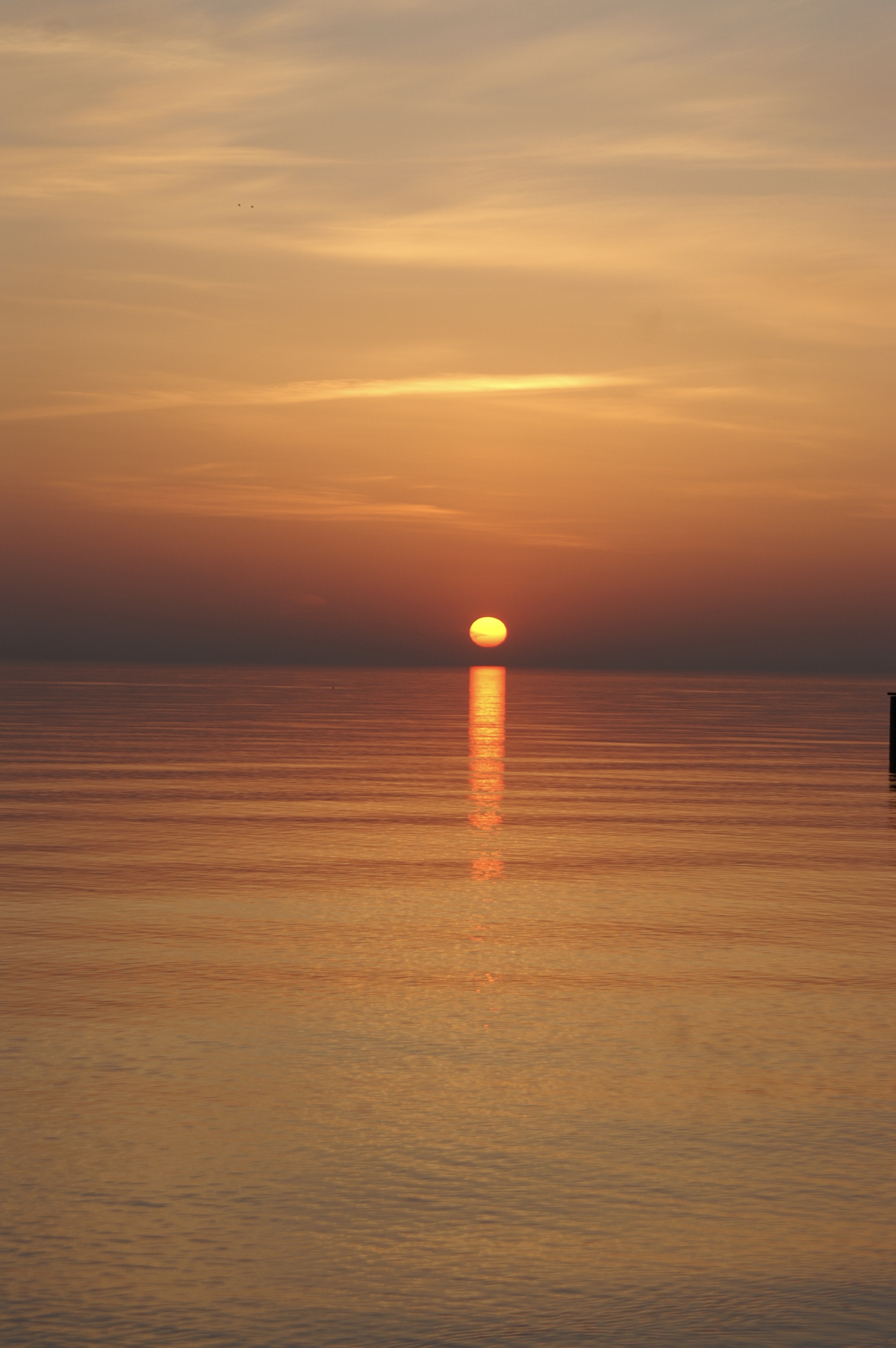
And indeed the sun does crown the cloudy horizon.
And a child marvels at just how big it is.
And the lake reflects the glowing red
into a path of light,
a pillar of fire guiding the way
into liberation.
Death has lost its sting, 
and God has arisen
in the swimming muskrat
and the calling seagulls
and the little boys gleefully kicking sand
as the round stone of the sun rolls higher into the sky,
as the pillar of fire grows too bright to look at
and sinks slowly into the water
where it becomes the promised land.  
 
Lighthouse Beach, Evanston, IL, April 4 2021

“My God,” shouts out the suff’ring Lord 

Written last year as we catapulted into the fullness of the pandemic and Holy Week.

To the tune of KINGSFOLD (To Mock Your Reign)

“My God,” shouts out the suff’ring Lord, 

“Why have you forsaken me?” 

Our king and the Incarnate Word

Has pow’r for just one plea. 

His body bears an anguished pain

Beyond the heavy cross. 

No human language can contain

This emptiness of loss. 

“My God,” yells out the hungry child,

“Why are you so far from me?” 

Their body, dirty and reviled, 

Is home to Deity: 

The lonely Christ is present there

And joins the tearful cry

That dares to give voice to despair

And hungers for reply. 

“My God,” cries out the broken Earth,

“Can you not hear my groan?”

This planet to which God gave birth

Now reaps what we have sown. 

The Lord of Life with flesh of clay

Is there in every death,

In each extinction, every way

Creation gasps for breath. 

“Where are you, God?” the desperate pray

As they reach out for a word. 

Both midnight and the brightest day,

They question who has heard. 

The lonely, sick, abused, and poor – 

Christ joins them from the cross

And echoes from his wounded core

The fullness of their loss. 

Feast of the Annunciation

I wrote this hymn during the season of Advent this past year because I longed for new lyrics to the familiar carol “God Rest Ye Merry, Gentlemen.” But this song also is appropriate for March 25, the Feast of the Annunciation, the day we celebrate the angel’s visit to Mary and Mary’s perplexed but wholehearted ‘yes.’ I was inspired both by Mary’s own song and by St. Basil’s ancient words: “Annunciations are frequent; incarnations are rare.” What seeks to be made alive in you today?

The angel came to Mary with the message, “Do not fear!

You are the highly favored one, and God is with you here,

For you will bear the Son of God and bring God’s kingdom near!”

O, tidings of comfort and joy, comfort and joy! O, tidings of comfort and joy!


When Mary heard the angel’s words, she asked, “How can this be?”

The angel opened up to her the sacred mystery,

And even then her longing grew for all to be set free.

O, tidings of wonder and joy, wonder and joy!  O, tidings of wonder and joy!

And Mary told the angel, “Here I am to serve the Lord.

I will receive God’s promises according to your word.”

And she prepared her heart to hold the Spirit then out-poured.

O, tidings of mercy and joy, mercy and joy! O, tidings of mercy and joy!

Then Mary raised her voice to God in hopeful, thankful song:

“God has begun the turning we have waited for so long:

Redemption comes to lift the weak and to reshape the strong!

O, tidings of justice and joy, justice and joy! O, tidings of justice and joy!”

The angel comes to each of us, invites us all to bear

God’s love made flesh within our lives. So let your hearts prepare!   

Will Mary’s yes take root in us and grow until we share

God’s tidings of comfort and joy, comfort and joy? God’s tidings of comfort and joy!

He was moving his hands too much

I originally wrote this after the death of Terence Crutcher in 2016. It remains unfortunately relevant.

When they gunned God down on the side of the road,
they said God shouldn’t have moved his hands so much.

When they threw God in a prison cell for failing to signal at a turn,
they said she should have showed a little more respect.

When they shot God playing in a city park,
they said he looked so old, so threatening.

When they heard God lift up her voice to demand justice for her children,
they said she was too loud and shrill.

When they executed God in his own neighborhood,
they said he looked suspicious.

When they asked God who could throw the first stone,
he bent down in the sand to write us something.
We might know what it was if we hadn’t stopped him.
He was moving his hands too much.

How I learned to love reading the Psalms every day

If you do enough reading about Christian spiritual practices, you will inevitably come across writers waxing rapturous about about the daily discipline of reading and praying the Psalms. I’d been skeptical. There were some psalms, it was true, that resonated with me. Psalm 42 has been a favorite for decades. More than once I had turned to the Psalms in times of danger and found comfort there. But it was hard for me to imagine praying these often strange songs day-in and day-out.

I can’t remember what prompted me, but I finally decided to give it a try, reading 5 psalms each day for a month; there are 150 Psalms, so if you read 5 each day, you cycle through them all in a 30-day period. Much to my surprise, I kept to this practice for several months. In doing so, I discovered several aspects of this practice helped me connect best to this ancient prayer book.

First: I read them aloud. The Psalms are songs, written for public worship and expressive reading or singing. Reading a psalm to myself in my head was not easy to focus on, and I would feel my attention slipping, but reading them aloud highlighted the poetry and vibrancy of the language. It forced me to slow down, to contemplate the words, to let them find a place in the world. Sometimes my voice was barely a whisper, but the simple act of breathing the words gave them life.

Second: volume matters. I read 5 psalms every night before I went to bed. I didn’t get to skip any of them (not even the interminably long Psalm 119). Reading a greater number of psalms each day took the pressure off each chapter or verse; I knew that I would be moving through various emotions and experiences in each reading, and it was highly unlikely I would empathize with them all.  So I stopped worrying about their emotional resonance and knew that, at some point, I would come across a phrase that felt like an earnest prayer. The rest didn’t have to be my prayer.

Which leads me to my third lesson: praying from the margins. Dietrich Bonhoeffer wrote that, when praying the Psalms, we can think of ourselves as joining our prayers to Christ, who prays them, too. I also imagined joining my voice to those who are in distress. When I was in Sierra Leone for several weeks as a teenager, a neighbor began trying to peek into our windows at night, and it was was terrifying. I remember sitting under my mosquito net one night, trying to calm my breathing, reading psalms about deliverance from enemies that I had never really connected to before. Outside this experience, I haven’t felt I needed those enemy psalms. However, when I began my Psalm-reading practice, it was month or so into President Trump’s new administration, and harm against immigrants was ramping up every week. So I imagined frightened families on the border calling out to God for rescue, and I tied my reading to their prayers. So many of these psalms suddenly became relevant, words I knew siblings across the globe were crying out in some way. Praying the Psalms was not about me. It was a way pray with God’s children pushed to the edges of world.

Fourth: repeat the cycle. By starting over again at Psalm 1 when I finished Psalm 150, my prayers took on the shape of a circle rather than a line. My evening prayers were not about reaching a particular destination but about relating to God and to the communion of saints in widely varying circumstances: praise, confusion, assurance, fear, hope. And then coming back to those places again, knowing that each was a part of the human experience. The Psalms and their language became familiar. I would sometimes find myself structuring my spontaneous prayer throughout the day in very psalm-y ways. These songs became a part of me, not simply words I read. Sometimes now I will read through just one psalm before going to bed, and it feels like the entirety of the collection is then invoked in me.

I continue to be surprised by how much this practice has changed my relationship to the Book of Psalms, to scripture in general, and to prayer itself. Perhaps you, too, have felt curious about praying the Psalms – if so, take whatever from these observations feels helpful and discover what your own practice looks like.


On Psalm 106

On Psalm 106


We move in circles,

spiraling around your presence

and our absence,

spinning from faith, to doubt,

to apathy,

and swinging around

to faith again

only through

centrifugal grace.

Fill our empty centers

with stories of your fullness,

until we stop seeking for signs and wonders

and rest in the miracle of movement.

Two Daughters

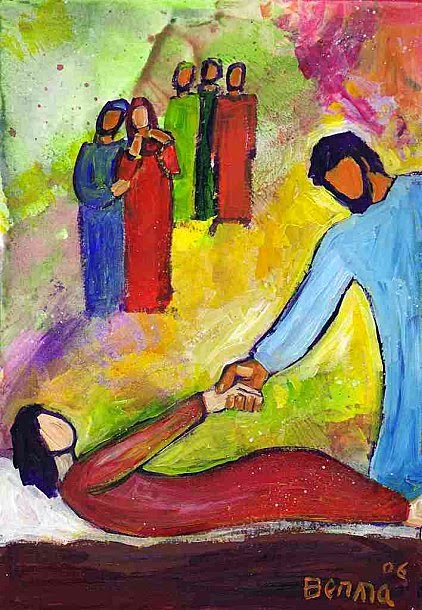
A couple weeks ago, I preached a sermon at Reba Place Church, my spiritual home in Evanston, about the resurrection of Jairus’ daughter in Mark 5.  In my seminary studies, I read about a connection between this story and another tory of an unnamed daughter of an Israelite leader, Jephthah, in Judges 11.  Jephthah’s daughter is sacrificed because of her father’s hasty and unfaithful vow, and her cut-short life is honored by Israelite women for centuries.  In the book of Judges, her sacrifice represents the fallenness of Israel and the death-dealing forces at work in the world. 

talithakum

Jairus’ daughter is saved because of her father’s faith, and her resurrection prefigures Jesus’ own resurrection.  Her healing serves as a sign of Jesus’ power for life over those death-dealing forces that surround us and speak so loudly.  For me, brining these stories together helps me notice God at work in the lives of young women across the globe and throughout history, girls who have been expendable in the hands of power and vulnerable to the violence of our societies.  I also began to look deeper into the ways God is present in my own struggle for life over the power of death.  The audio for the full sermon is here, but below is an excerpt imagining the two unnamed daughters as one young woman who Jesus calls to life.   

After clearing away the mourners, Jesus walked into the room, and he took the young girl’s cold hand in his. He said to her her, “Talitha cum!” Young woman, get up! Daughter, arise! Death is knocking hard at the walls of your heart, and death is breathing down the back of your neck, but you are not dead, only sleeping.

Daughter, arise! Do you feel the light sliding across your eyelids? Do you notice how now, again, your chest rises and falls with the wind on the breath of God? Do you sense your blood flowing again, not pooling, but racing through your limbs and circling strength back into your bones? There is a balm in Gilead, and the leaves are crushed for the healing of your being.

Daughter, arise!  Death presses in from all sides; it blinds, it maims, it tears you apart. But it will never. Have. The last. Word. Whether the overwhelming weight presses from outside or the insidious shadows grow taller inside you, I always have the last word. There are forces that want to claim you as their own, that silence the loud beating of your heart and crush the strong stance of your feet, but I will not let them destroy the purpose I have called you to. My voice calls louder still.

Daughter, arise! I call you up! I name you as alive! I pull you to myself, and you are not alone. When I pull you up, you will stand. On your own two feet. And you will walk. The light in your eyes and the breath in your lungs and the blood in your veins will all work for a common cause: to move you in the dance I have set for you. You are un-paralyzed. You are re-enfleshed. You are healed for a purpose.

Daughter, arise! I am sorry that your need was faster than my arrival. But everything wrong will be made right. Everything dead will live. I will wipe every tear from your eye, and there will be no more fear. I cast out your fear when I called you my own. Daughter, arise, he told her. And he took her hand.

And she stood up.

——-

image found here

Thursdays in the Lectionary – When They Were All Together in One Place

This week I’m at a the Forum for Theological Exploration‘s Christian Leadership Forum, and I’m part of the team preparing the Fourm’s times of worship.  Because Pentecost is this coming Sunday, our team decided to focus on the coming of the Holy Spirit and the sometimes difficult waiting we do in anticipation of that arrival.  We read this litany at our opening worship this morning, and it was my hope in writing it that it would prepare our hearts for the often surprising activity of the Spirit.      

When they were all together in one place, God of the unexpected, your people had no way of knowing what would happen next.

We have come together to be shaken out of our complacency.

When they were all together in one place, unimaginable God, you met your disciples there, right where they had gathered.

We have come together with empty hands and tired hearts, knowing that our desire to be present is enough.

When they were all together in one place, untamable God, you breathed into their beings a holy disorder, a sacred cacophony, a resurrected life that baffles, confuses, and invites us into new ways of knowing and being.

We have come together as people still learning how to let go of our plans and expectations to make way for your wild grace.

But God, we so often forget that the miracle of Pentecost came fifty days after the miracle of Easter. There were fifty days between an encounter with the empty tomb and the formation of a Spirit-filled community. We are impatient people, and we fill the quite spaces of our lives with attempts to capture you in words, in numbers, in progress reports and projected outcomes.

Give us humble spirits and fresh eyes to pay attention to your surprising acts of justice and mercy.

God, when we seek the presence of your Holy Spirit, you call us to gather together from our places of difference and listen—to you, to each other, to the longings you stir in us.

We have come together to wait.

Come Holy Spirit.

Amen.

Thursdays in the Lectionary – Stones

I do know it’s not Thursday … I’m a day late with this post because yesterday I was busy finishing up my FIRST YEAR OF SEMINARY!  It was a pretty grand day.  The world got so excited about it that it forgot what season it is and snowed today. 

Rachel Held Evans, a writer and thinker I have long admired, began a new series in which she will be dedicating her Thursday blog post to the coming Sunday’s lectionary texts.  She invited her readers and fellow-bloggers to join her in this task of delving into the Bible as a community – whether through a traditional sermon, a poem, a reflection, art – and I am taking up that invitation.

This week’s texts are: Acts 7:55-60, Psalm 31:1-5, 15-16, 1 Peter 2:2-10, John 14:1-14


One Stone

I jumped on the shovel

shlmph

It sliced into the hard-packed earth

Roots and sticks and last year’s leaves turned over and under

klink

I shove aside the dirt and look down to the heart of the world.

Will I hurry away

and sell everything

for the the Stone I see there,

One large enough to host the the longing of universe

and build it into reality?

It was so terrifying,

they buried it in the loam of the garden,

hoping it might grow there into something more

manageable.

Two stones

They fit like they had always been together

one stone next to the other

breathing with one sturdy lung

binding the whole wall together

into a sanctuary of holy possibility.

Three stones 

When I ran into town

and told them all about the wall I had built,

with the Heart-stone pulsing powerfully at the center,

I asked them to come and see

and imagine with me

just what kind of

roads and bridges and homes

such a living wall could offer.

Lord, do not hold this against them:

three stones hurled in fear.

We will pick them up together

and add them to the wall.

The cornerstone is large enough

to hold every stone they throw.