When we know where the fire burns

Due to the peculiar nature of layovers, my flight back to Chicago from Southern Oregon took me through Los Angeles. As we flew over the California coast, I saw billows of smoke rising into the air—evidence of the wildfires tearing their way across the dry ground. I was sad, even disturbed, by these fires; they poked at my desperate feelings about climate change and environmental preservation. But I was removed from them in every possible way, soaring miles above in a machine that only added fuel to the fire of the climate crisis.

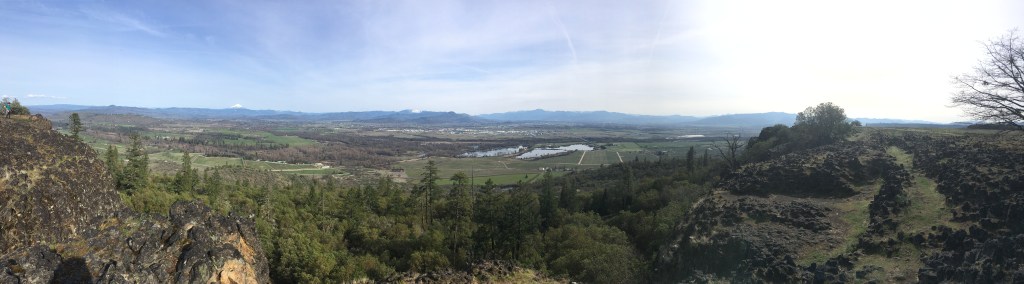
Instead, my mind was on Oregon and the beautiful Rogue River Valley I’d left behind. I had been there for a storytelling training, once in March to begin and once in October to close out. The place had captivated me—three mountain ranges joined and merged at this valley, filling the horizon with sharp blue shadows. The terrain—the climate, even—varied depending on what side of the mountain you stood on, or how far up you were. I explored mossy creek gullies and snow-capped peaks, drove down winding roads through oak savannas and sat in quiet pine forests. I hiked up volcanic landscapes and watched the valley spread out beneath me. I loved the way the topography was open enough to be a like a map—I could see each landmark no matter where I was, miles and miles away, and hold the shape of the valley in my mind.

At night, I watched the mountain shadows fall over the pastures and vineyards, and I breathed in the smell of wood smoke. In the morning, I cut up pears grown nearby and saw the sun move over the Cascades. This place brought me such deep peace and gratitude.

Almost a year has passed since that trip, and we’ve circled back around to wildfire season again. I’ve watched with pity as the skies across Washington and California fill with smoke. I’ve wondered how long it will be before we finally take climate change and it’s exacerbating effects seriously. And then, this week, I saw the news on my facebook feed, echoed by the many friends I’d made in Oregon: the Rogue River Valley was burning. The fire was un-contained. The wind was whipping the flames past the farm I’d stayed at during both visits. A colleague’s house was burning down.

Pain filled my stomach. The images of towering flames caught my breath. I felt like I wanted to throw up. Helplessly, I listened to a live video as the firefighters named roads I knew and prepared to evacuate whole communities. In my mind’s eye, I could trace the path of the fire as it devoured that beautiful place. I cried. I railed. I was no longer in an airplane looking down at a distressed but unfamiliar landscape. I was all but choking on the ash made up from a place I loved.

We cannot save the world in the abstract. That’s not how we humans work. The word “courage” comes from the word “heart,” and we fight most fiercely for what we love. The magnitude of the ecological crisis we face—climate change, species loss, ocean acidification, melting glaciers, fiercer storms, degraded soil—it’s all too much. One brain cannot face the enormity of it all and still have the power to act.

So, instead, we must let little pieces of the miraculous world God so loves into our own unfathomable hearts. And it is then we witness how God’s own passion blazes within us, ready to travel through overwhelming grief and impossible odds to show us just how much we love the world, too. We feel our kinship with some small space on the planet, and we grow a determination to help that place flourish.

I can’t stop the fires scorching the beautiful Oregon valley that has captured my heart. Not a single one of us can clean up the whole ocean or reduce carbon emissions enough to make a difference. But because I have opened wide my heart to the love of God present in some small patch of God’s good creation, I will find the courage to love the earth well. To protect the places that bring me delight. To cultivate the imagination needed to envision new systems of energy and commerce. To re-align my rhythms with that of the place I call home. Even to let go of the possibility of ever visiting Oregon again, if that’s what it takes to protect what I love. If we are driven by fear, we will fail. When we are driven by love, that’s when miracles happen.

The change we seek won’t happen overnight, but, spurred by love and sought together, it will grow like fresh new plants after a forest fire—resilient and ready and bursting with hope.
Conversations I had with local flora and fauna on Monday, December 10th

4432DA55-CFD4-4BD2-8E09-B517B1786395

Walnut tree – are you a walnut? 

My forestry is less refined 

without leaves. 

Your ancient bark is so deeply ridged –

I want to fold myself inside

and learn from you

the slow pace of winter sap rising. 


Is there a minute network 

of chattering fungi beneath my feet?

My tree book suggests there is,

but you are a newly reborn forest, 

so recently returned to life from clear cut ground. 

Has your speech returned?

We silenced you because

we didn’t know what we were doing. 

But I am listening now. 


I was walking too loudly –

I’m sorry –

cracking ice and branches and frost. 

But now I’m stopped and waiting and still,

and you can come out again, 

chickadees and sparrows 

and whatever bird you are,

nearly infinitesimal,

almost hidden by the branch you land on. 

Hop, scuttle, peck. 

A bright yellow stripe

crowns your tiny head,

and I’m not sure that I have ever seen you before. 

Genus? Species?

For the first time ever,

it occurs to me 

to ask you what you call yourself. 


Equine companion,

who rode through here sometime last week,

might you have left your piled gift

somewhere easier to get around?

F0A6F816-B9FE-439A-8495-A3C51072FD47

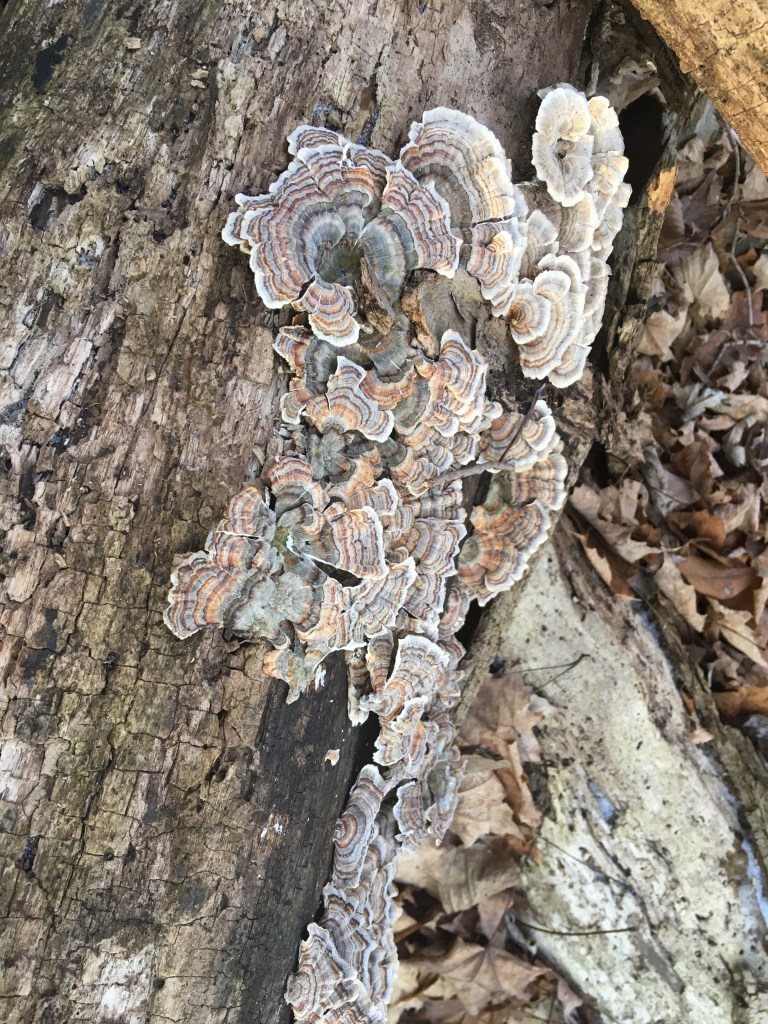
O, great mystery!

A canyon of color 

contained in a mushroom. 

You are a bearer of worlds. 


The river breathes. 

More slowly than humans,

and even than the green things,

but there is a rhythm,

in and out,

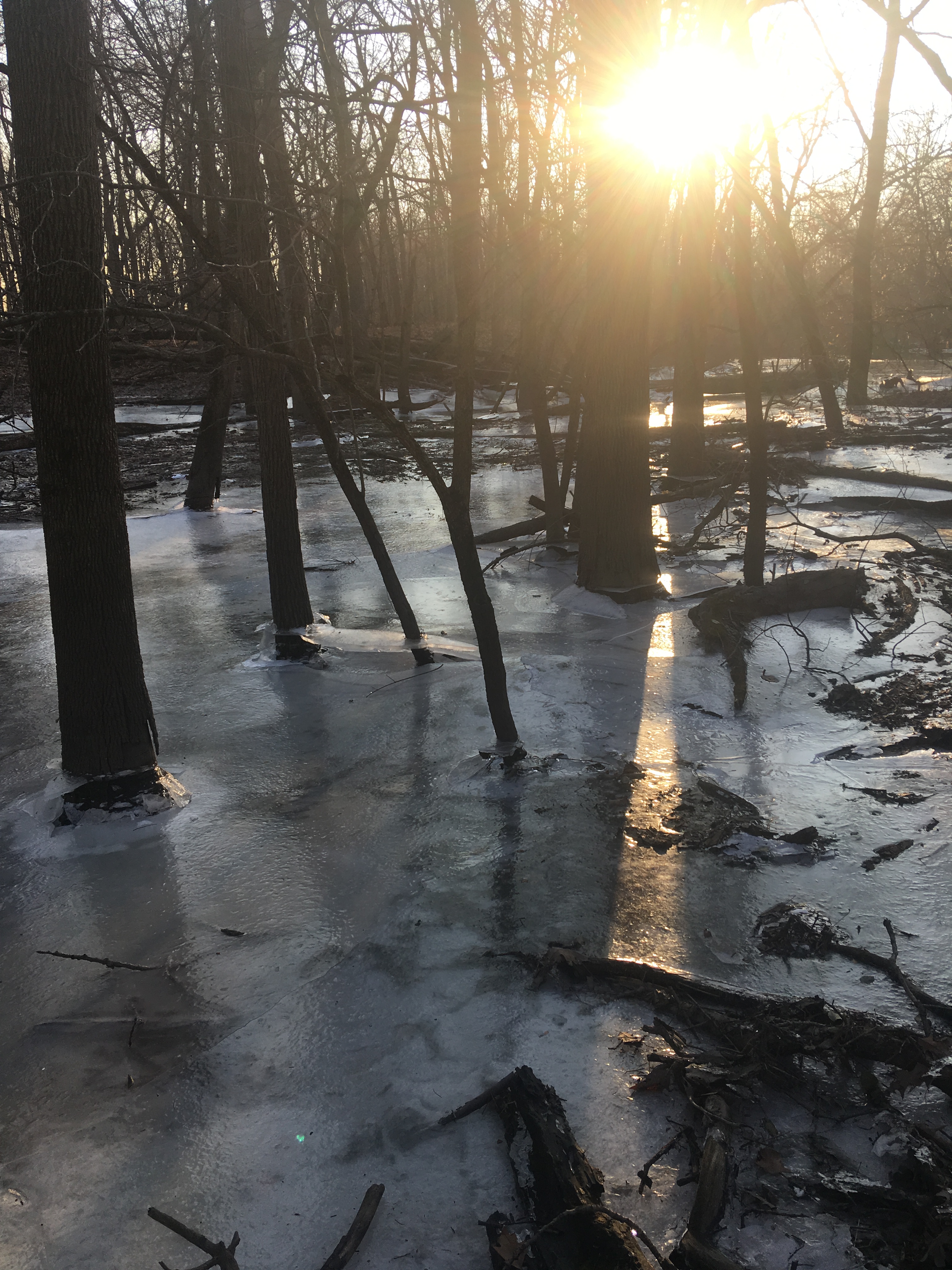
and I can see it in the ice on the flood plains –

in the layered ice rings around your trunks,

and the cracked lines dipping in the sheets of ice above your roots,

proof of water levels moving

up and down,

expanding high,

and compressing low,

like lungs,

water like air,

the earth a body,

where a flood is not a disaster,

but a deep breath in.


You really wanted to see that bridge,

my own dear self,

and when one way was blocked

by thunder-cracking ice

with slowly breathing water pulsing beneath it,

you came this way. 

Was it worth it?

On most paths,

the mud is frozen

in space and time

with prints preserved

of human, deer, horse, raccoon,

and maybe occasionally

a dog.

But this path,

this leaf-strewn,

mud-caked, 

water-widened way,

is quickened by the breathing river,

and your feet sink into the loam,

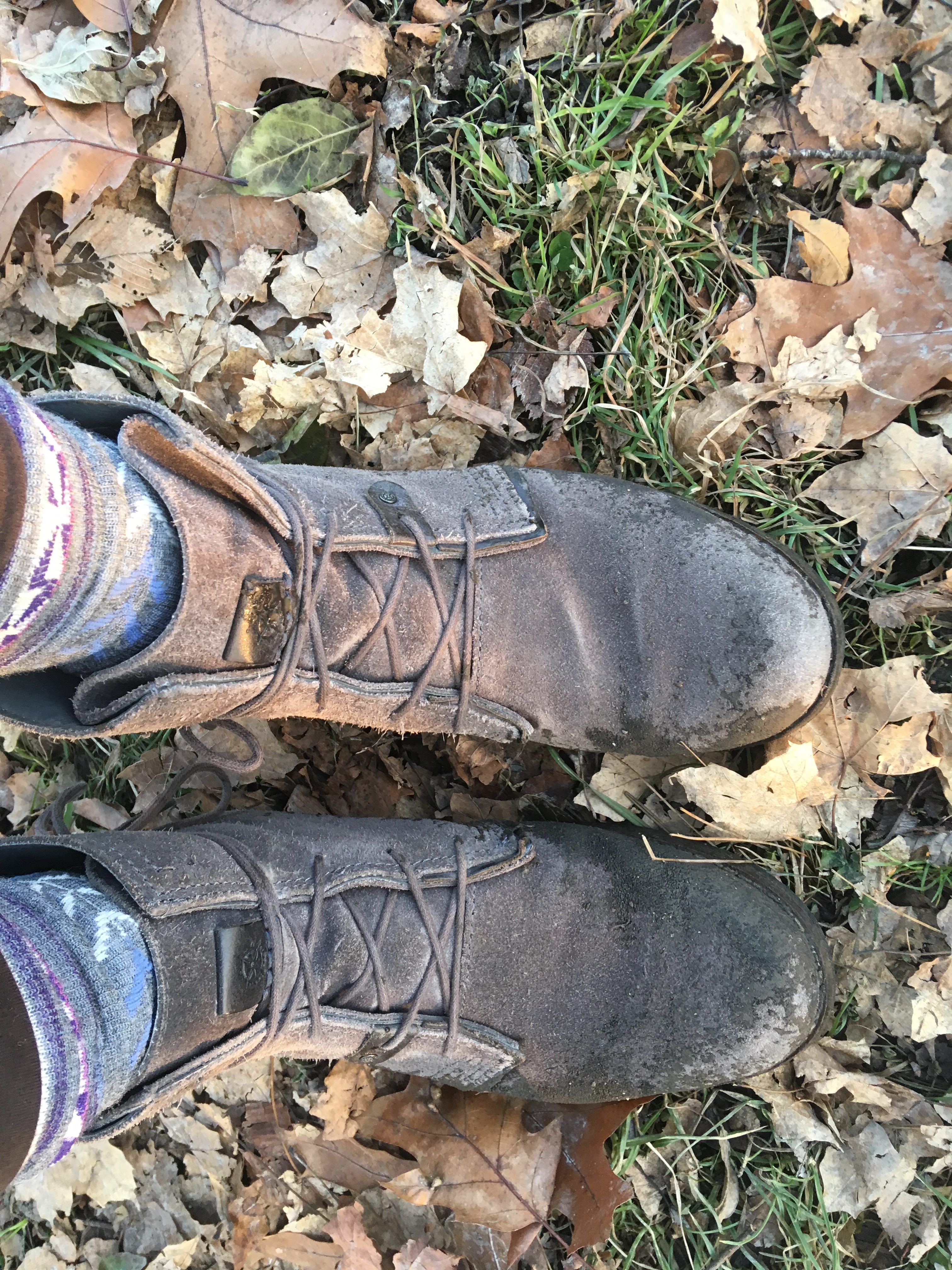
muddy water rising over your grey suede boots. 

Cold feet. Potentially ruined shoes. 

It wasn’t so much that the bridge was worth it,

was it, my own dear self,

but that the setting sunshine,

and the sliding black river,

and the maple leaves still hanging,

were calling for a witness. 

C5129B0D-63B1-4423-8379-9F825B18E6BB


Let my people go

(In honor of Holy Week’s Table Turning MondayI offer this liturgy of (in)justice.  This was originally a sung and spoken-word piece I did for a class presentation on the theology of anthropology.)  


When Israel was in Egypt’s land

Let my people go

Oppressed so hard they could not stand

Let my people go


Go down, Moses,

Way down to Egypt’s land.

Tell old Pharaoh

to let my people go.


Go down, Moses,

way down to the riverside

that runs with the blood of the mined-up earth

shining oil and topsoil run-off

dry-throated children crouch on the shores

with plastic pails they gather in life and death

and we, the blood-letters

don’t have to watch

their illness fester on the banks of the river of life

they ask for no parting of the water—

only a clear cup to drink


Go down, Moses,

way down to the city of tents

where a young girl kicks at a ball of rags

and tries to bury the sound of gunshots

in the swift, strong movement of muscle

sit with her there

and do not try to explain away

the horror she hides in the catch in her smile

give her that cup of cold, clear water

but don’t expect to be rewarded with the return of innocence

stolen by the greed built into our daily commute


Go down, Moses,

way down to the prison cell

where a tattooed man holds his head in his hands

and weeps

because he was a prisoner long before he got here

and yesterday during visiting hours

he saw his daughter’s face for the very first time

and he was afraid

afraid of the chains he saw growing around her tiny ankles

chains that snake through the houses of my neighborhood

and end at my doorstep


Go down, Moses,

Way down to Egypt’s land.

Tell old Pharaoh

to let my people go.


Go down, Moses,

way down to the path that leads to the tree of life

fall down on your knees in the dust of the earth

where I buried my hands and wondered

how can such fertile ground

shape such barren people?

Tell me, Moses, how I got here

And tell me, please, where all this is going

Tell me plagues have to do with freedom

Tell me the price of the firstborn was worth it

But most of all, Moses, tell me I am going with you


Show me a God who stretches out her mighty arm

and scatters our expectations

a God who holds our hearts and softens them

to each other

to Herself


Go down, Moses,

Way down to Egypt’s land.

Tell old Pharaoh

to let my people go.


Tell me, Moses

what do I do

when I discover that I am not in Egypt

I AM Egypt


Let my people go.