I’ve been trying to find words for over a week now. But sometimes injustice requires imperfect words. There is great harm being done in Palestine, and we perpetuate the harm when we are silent.
There are those who have written expertly on the violence in Israel and Palestine. You can find some of those writings and videos here: a Christian perspective, an introduction from the group Jewish Voice for Peace, and an editorial overview by a Doctor’s Without Border’s member.
(There’s also this video via John Green that gives a historical explanation. I don’t necessarily agree with all his conclusions [and I don’t know why all the people profiles are so visually odd looking], but it was a helpful overview for me.)
There are those with knowledge and resources on responding with justice. You can find some of their suggestions at the US Campaign for Palestinian Rights, B’Tselem, and the Palestinian Youth Movement.
I am not an expert. I do not have personal connections to the area. But I do have a profound connection to the situation (perhaps you do, too) because I am a member of a colonial/settler people group. And that means my engagement with the current issue of occupied Palestine must also include a willingness to confront my violent ancestral history.
Some of my ancestors were recent settlers, coming over to the United States to claim the promises of cheap land and new beginnings. But a solid majority of my ancestors were colonizers, arriving four-hundred years ago in what was occupied, conquered, and stolen territory and carving their new lives out of the land and livelihoods of the indigenous people. This is a hard history to face.
Humans have been moving around the planet since we could walk, but migration and colonialism are not the same thing. A colonial project requires an exploitive empire, an assumption of superiority, and a justification for consistent violation of indigenous peoples’ rights (if the indigenous people are acknowledged at all). The place I live has been marked by this oppression and violence, and I live with that inheritance. This is a hard history to claim.
Growing up, I felt such a deep connection to the land I lived on. I felt held by the hills and trees and my time was marked by the way the seasons shifted around me. I experienced a deep sense of belonging, of knowing and being known. The first cracks in this image came with the realization that the fragrant white honeysuckle I was accustomed to enjoying along the edges of a May-blossoming treeline were actually an invasive species. These white honeysuckle had crowded out the native and now hard-to-find pink and red honeysuckle. My sense of feeling at home began to slip. And then other truths about the land emerged: chicory isn’t native, clover isn’t native, I’ve never seen the once-ubiquitous sweetgrass in the wild. I realized that my ancestors came not only as impoverished people fleeing to something new, but they also came as conquerors, inflicting the oppression they had received on the natives they refused to recognize as equals. I had to face my own invasive-ness as well as the realization that I wasn’t sure I knew my native land at all. This is a hard past to internalize.
I suspect that one reason we American are often silent on oppression in Palestine is because we see the resonances with our own history. Truly seeing is painful. It dredges up feelings of confusion and guilt. It requires an admission of wrong. But if I am willing to stay with my own colonial narrative long enough, a new possibility emerges.
I can’t change the past. I can’t undo every action my ancestors took to trick, coerce, and kill the people already present on this land. I can’t retract the harmful British colonial policies that created the current situation in Israel and Palestine. But I can choose to encounter the past with integrity. I have the power to own my place in a lineage of destruction that I did not create but still benefit from. I am free to name the recurrent themes of settler colonialism around the world – and still present in my own country – and to amplify the voices of those seeking liberation. And, with enough work, I can choose to transform the trauma my people endured and then inflicted into solidarity with the oppressed.
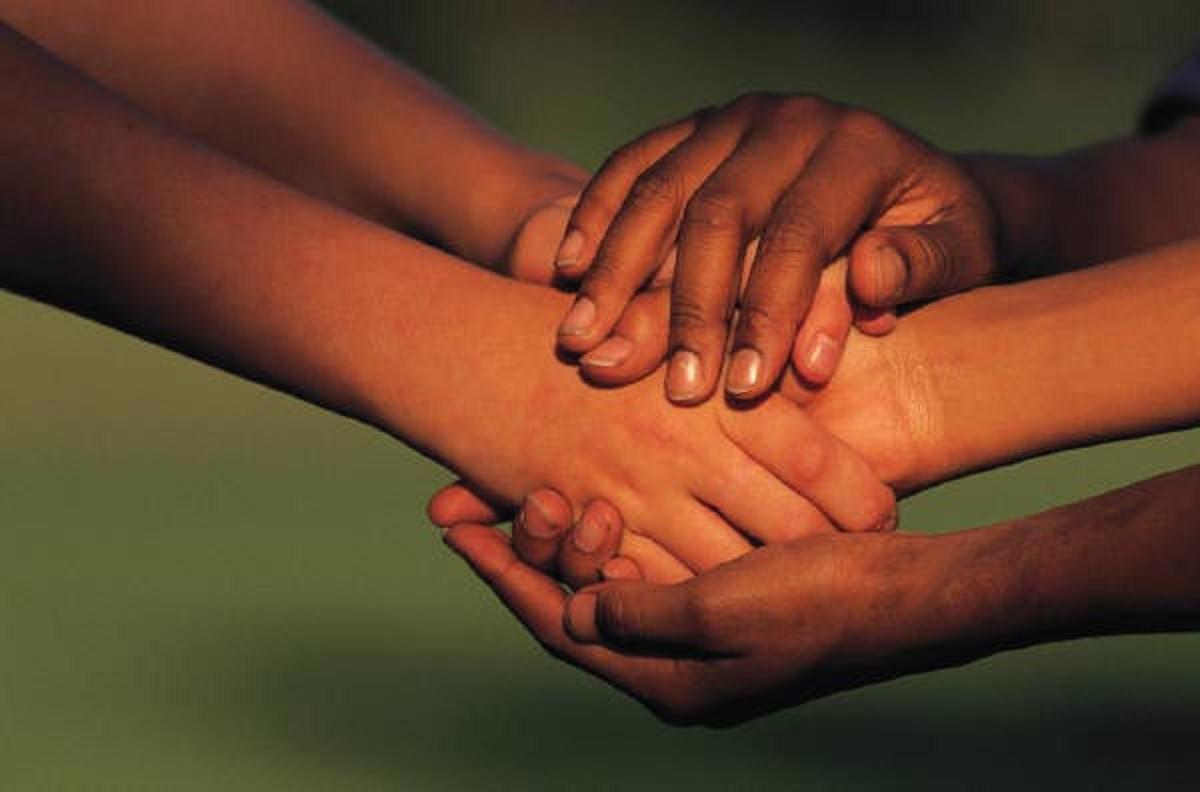
This inner liberation must go hand-in-hand with the outer work of seeking justice and peace in places like Palestine. If we choose to look together into the harmful narratives we have inherited, we can take the first steps to writing a new story of freedom.
 cassidhe hart